What a website really costs in Spain
· 4 min read ·
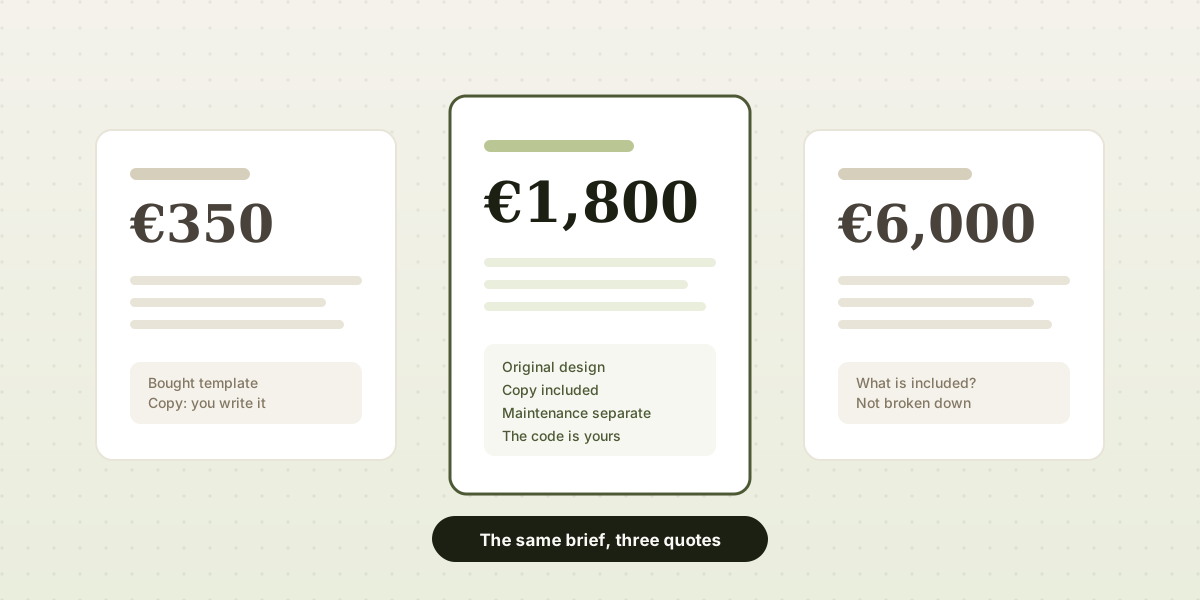
If you have asked for three quotes for your website, the figures you got back probably have nothing in common: €350, €1,800 and €6,000. The disconcerting part is that all three proposals claim to be doing the same thing, "a website for your business".
The difference is real, but it is almost never where you are told it is.
What genuinely moves the price
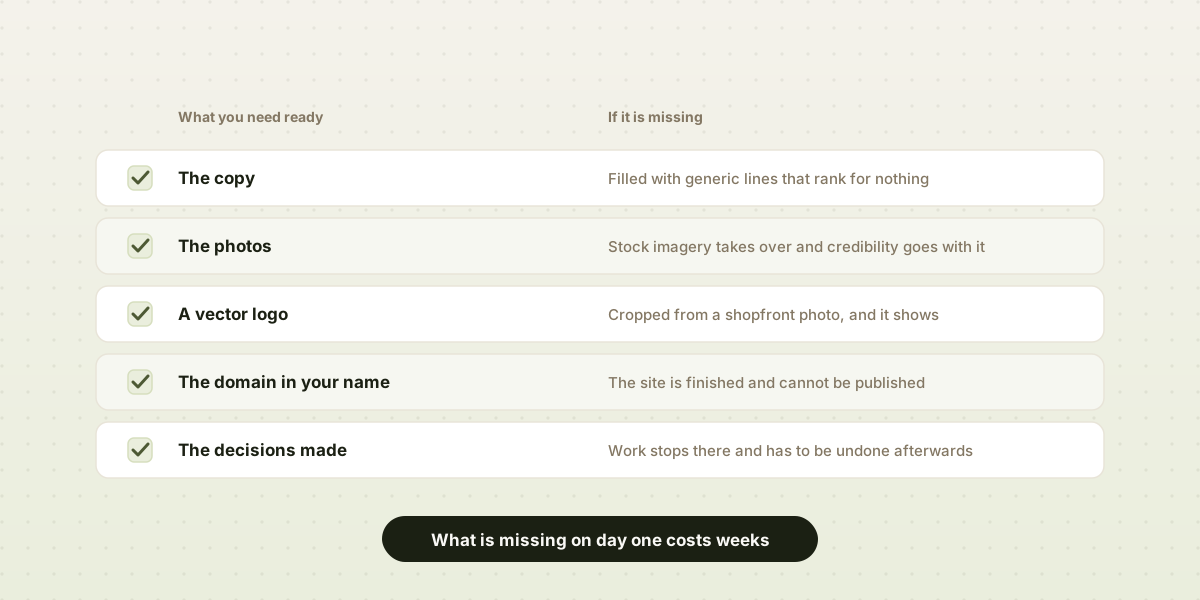
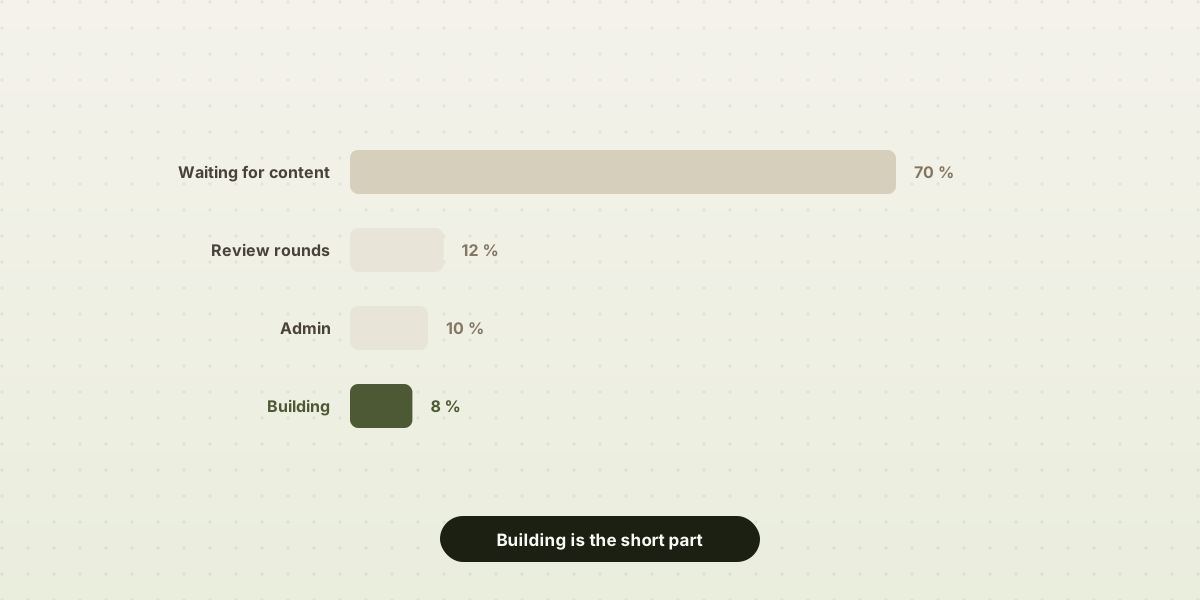
Who writes the copy. By some distance, this is what adds most to the cost and what holds projects up longest. A cheap quote nearly always assumes you are supplying the text yourself. If you do not have it ready, the project sits still for weeks and you end up paying for copywriting halfway through.
How many templates are underneath. A €350 website is a bought template with your logo on top. There is nothing wrong with that if you know it going in: the problem is paying for it as though it were original design.
Whether anyone is going to maintain it. A website is software connected to the internet. Certificates expire, security flaws turn up and browsers change. A quote that never mentions maintenance is not throwing it in for free: it is not doing it.
The three questions that clear up any quote
- What happens if I want to change a line of text in six months? If the answer involves paying, add it to the real price.
- What happens the day I stop paying? With a one-off payment, the site stays with you. With a fee it stops being published, and then the question to ask is whether the work is kept and comes back when you take a fee out again, or whether it is lost. The domain, either way, has to be in your name.
- What exactly does maintenance include? "Support" on its own means nothing. Ask how many changes a month it covers and how quickly they reply.
An honest benchmark for 2026
Before any figures, two things that get quoted the same way and do not cost the same have to be separated.
The bespoke commission
Somebody gathers what you need, decides the structure, designs it, builds it and revises it. For a sole trader or a small business in Spain, these are the sensible orders of magnitude:
- Single page (landing): between €500 and €900
- Corporate site of five or six pages: between €1,000 and €2,500
- Simple online shop: between €2,000 and €5,000
- Maintenance, billed separately: between €25 and €150 a month
Below those figures, on a bespoke commission, something is being cut: usually the original design, the copy or the maintenance. Above them it may well be justified, but you should be able to have it explained to you point by point.
What you are paying for there is, above all, somebody's time. That is the large item and it is what explains the range: the same shop costs twice as much if it takes four meetings to settle.
The website its owner builds
When the system is already built (the layouts, the measured colours, the accessibility, the engine that produces the site), that time drops out of the price. Not because anyone works for less, but because the work is already done and it is shared out among everyone who uses it.
What remains is what it costs to keep the site standing: serving it, renewing its certificate, keeping its backups and letting its owner change it whenever they want. That is a monthly cost rather than a one-off, which is why it is charged that way.
That is the order of magnitude at Díaz Oliva: a monthly fee, cheaper paid yearly, with hosting, certificate, backups and the editor inside it. Publishing one page costs nothing, and the figures from there upwards are on the pricing page. Building the site and trying it costs nothing either; you pay when you publish more than one page.
Neither model is better than the other in the abstract. What you need to know is which one you are being quoted, because comparing them on the figure alone tells you nothing.
Worth doing before you decide
Ask to see something before you pay. Not a mockup in a PDF, but the website working, so that you can open it on your phone. It is the only way to find out whether what you understood and what the person building it understood are the same thing.
And keep the agreed price and what happens the day you stop paying in writing. Not because there is going to be trouble, but because awkward conversations are avoided by putting things in writing beforehand.
Here that check comes before the money, because there is nothing to quote: the site is built here, you watch it finished as you type, and publishing it costs nothing.